
Repair or Replace Sinking Concrete? What You Need to Know
Concrete is one of those things we expect to stay put. You pour it, smooth it, and trust it to hold its place for years. So when your sidewalk, driveway, or patio suddenly starts dipping or sinking, it can catch you off guard.
But here’s the thing: concrete doesn’t just sink out of nowhere. Something underneath is shifting, moving, or slowly giving way, and the slab is simply reacting. The ground changes first and the concrete follows.
The bright side? Once you understand what’s happening underground, fixing it becomes surprisingly straightforward. And with the right approach, you can prevent it from sinking again.
Let’s get into it so you know exactly what’s going on under your feet.
Causes of Sinking Concrete
Concrete doesn’t sink because it’s weak, but it sinks because the ground beneath it becomes unreliable. Here are the most common reasons that might be pushing the concrete down.
Poor Soil Compaction
Before concrete is poured, the soil underneath needs to be packed down tight, almost like pressing sand firmly under a castle so it doesn’t collapse. But if this step is rushed or skipped, the soil settles later… and the concrete settles right along with it.
This often happens:
- After utility work, where pipes or wires were buried.
- In new construction, where teams are racing against deadlines.
- In yards with soft or loose soil.
When the soil sinks, it creates tiny empty pockets. And concrete, even though it’s strong, can’t float. It eventually dips into those empty spaces. That’s when you start noticing uneven slabs or sudden dips that weren’t there before.
Soil Erosion and Washout
Water is sneaky, and it’s one of concrete’s biggest troublemakers. When rainwater, poor drainage, gutter overflows, or even a tiny plumbing leak starts washing soil away, the ground underneath becomes hollow. Think of it like someone secretly digging a tunnel under your sidewalk. If there’s nothing holding the concrete up, it drops.
Common signs that water is causing trouble:
- Puddles forming in one specific spot
- Cracks that keep widening
- Edges of the slab starting to separate
Even small, slow leaks can cause big headaches over time.
Soil Shrinkage and Expansion
Clay soil is one of the biggest troublemakers when it comes to sinking concrete because it doesn’t stay consistent. When it gets wet, it swells up and expands like a sponge, pushing the concrete upward. But as soon as things dry out, that same soil shrinks, cracks, and pulls away from the slab, leaving empty spaces underneath.
This constant cycle of swelling and shrinking creates a push-and-pull effect that makes the concrete move over time. One season your slab may look fine, and the next it’s dipping, cracking, or sitting unevenly. If your area has clay-rich soil, this kind of soil movement is one of the most common reasons your concrete refuses to stay level.
Drought Conditions
Most people assume that water is the only thing that can damage concrete, but long periods of drought can be just as harmful.
When soil dries out over weeks or months, it loses moisture and becomes brittle and crumbly. As it shrinks, it pulls away from the concrete above, creating gaps and empty pockets that leave the slab unsupported. Over time, these gaps cause the concrete to settle unevenly, forming dips, cracks, or sunken areas.
In New York City, areas like parts of Queens, Staten Island, and some inland neighborhoods in Brooklyn can experience drier soil conditions during the hot summer months. Here, the soil may feel rock-hard on the surface but have hollow spaces underneath, making concrete more prone to sinking.
In extreme cases, even newly poured slabs can shift if the underlying soil dries too quickly. This shows that both too much water and too little water can cause serious problems. Proper soil preparation and moisture management are key to preventing this type of damage, especially in NYC neighborhoods prone to summer dryness.
Organic Material Decay
Sometimes, what’s hiding under your concrete can quietly cause big problems. Old tree roots, construction debris, or leftover wood pieces can slowly decay over time. As they rot, they leave empty pockets in the soil, and eventually, the concrete above sinks or cracks. This often develops gradually, which is why it can surprise homeowners years later.
Common signs include:
- Sunken areas near trees or shrubs
- Cracks in irregular patterns
- Uneven settling unrelated to heavy loads
Fixing this usually means removing the decayed material, filling the voids with stable soil or grout, and lifting the slab. Ignoring it can lead to repeated sinking and more costly repairs later.
Freeze–Thaw Cycles
If you live in a cold winter area, you know water expands when it freezes, and concrete isn’t immune. When water trapped under a slab freezes, it can push the concrete up. Once it melts, the soil often doesn’t settle evenly, leaving gaps that weaken the slab’s support. After several freeze–thaw cycles, sidewalks, driveways, and patios can start sinking or cracking.
Signs that freeze–thaw cycles are affecting your concrete include:
- Raised slabs during the winter months
- Sunken sections appearing in spring
- Cracks forming after particularly cold spells
In New York City, neighborhoods that experience harsher winter temperatures, such as parts of the Bronx, northern Queens, and sections of Staten Island, are especially prone to this type of concrete damage. These areas can see temperatures dip below freezing multiple times a season, which increases the risk of soil shifting under your slabs. Winter doesn’t just make your fingers numb, but it silently works under your feet, gradually weakening your concrete and creating costly problems if left unaddressed.
Heavy Loads
Concrete is strong, but it has its limits. When heavy vehicles, delivery trucks, construction equipment, or even large dumpsters sit on a slab for extended periods, they slowly compress the soil underneath. Over time, this uneven compaction causes the concrete to settle, crack, or sink.
Even residential driveways aren’t immune. Common culprits include:
- Repeated parking of heavy trucks
- RVs
- Landscaping machines
If the soil wasn’t properly prepared to handle this weight in the first place, sinking becomes almost inevitable. Regularly monitoring heavy load areas and reinforcing the soil before pouring concrete can help prevent costly repairs later.
Ways to Repair Sinking Concrete
The good news is that sinking concrete can almost always be repaired without tearing out the entire slab. Modern repair techniques focus on lifting the existing concrete by filling the empty spaces underneath it, which saves time, money, and a whole lot of mess. Whether your sidewalk, driveway, patio, or garage floor is sinking, the goal is the same: restore support under the slab and bring it back to a safe, level position. Explore safestep contractors for reliable and long-lasting solutions.
Let’s break down the most effective repair options in detail so you understand how each one works and when it should be used.
Slabjacking (Mudjacking)
Slabjacking is one of the oldest and most trusted ways to fix sunken concrete. In this method, contractors drill small holes into the slab and pump a thick cement-based mixture underneath. This mixture flows into empty spaces, fills all the hollow areas, and slowly lifts the concrete back to where it belongs. It’s almost like giving the ground a solid foundation again, one that can support the slab properly.
This method works especially well for
- Sidewalks,
- Patios,
- Older driveway slabs
- Areas with moderate sinking
It’s also budget-friendly compared to full replacement. However, slabjacking does add weight because the grout mixture is dense.
So if the soil underneath is already weak or soft, that extra weight might not be ideal. Still, for many homes and small commercial spaces, mudjacking is a reliable fix that restores stability without much disruption or downtime.
Polyurethane Foam Injection
Polyurethane foam injection is the modern, upgraded version of slabjacking, and it’s becoming the go-to solution for many contractors. Instead of using heavy grout, this method uses a lightweight, high-density foam that expands on contact.
Contractors drill tiny holes in the concrete (much smaller than mudjacking holes) and inject the foam underneath. As it expands, it fills every gap, stabilizes the soil, and gently lifts the slab with incredible precision.
One of the biggest advantages of foam injection is speed. Most repairs take only a couple of hours, and the slab is ready to use almost immediately. It also doesn’t add extra weight to the soil, which means it works better in areas with loose or unstable ground.
The foam is waterproof, long-lasting, and ideal for both residential and commercial properties. Whether it’s a sinking sidewalk, warehouse floor, garage floor, or pool deck, polyurethane injection offers a clean, long-term solution with minimal mess and maximum accuracy.
Patching
Patching might seem like a quick and easy fix, and after all, it just involves filling cracks or leveling small dips with concrete or a patching compound. But here’s the important thing to understand: patching only treats the surface and ignores the problem underneath. It doesn’t fill voids, doesn’t strengthen the soil, and doesn’t stop the slab from sinking further.
Because of this, patching is best used only for very minor cosmetic issues, like hairline cracks or tiny uneven spots that don’t involve actual sinking. If the ground beneath the slab is shifting, no patch will stop it. In fact, the patched area often cracks again as the slab continues to move. Think of patching like painting over a water stain: it looks better for a while, but the issue will come right back if the source isn’t repaired.
Replacement
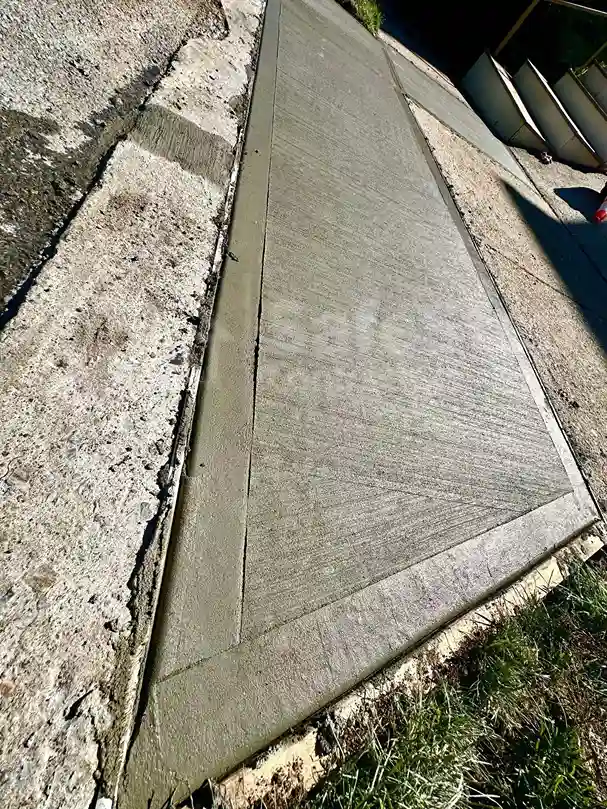
Sometimes repairing a sinking slab isn’t enough, especially when the concrete is severely cracked, the soil underneath has completely failed, or the slab has shifted beyond safe leveling limits. In these cases, full concrete replacement with the help of your local trused sidewalk contractors becomes the most reliable and long-lasting solution.
Replacement works by removing the damaged slab, clearing out all weak or unstable soil underneath, and rebuilding the base from the ground up. This ensures that the new concrete rests on a solid, properly compacted foundation rather than the compromised soil that caused the old slab to sink in the first place.
A proper replacement typically includes steps like:
- Removing unstable or eroded soil
- Rebuilding the base with compacted gravel or stabilized fill
- Improving drainage around the slab to prevent future washout
- Installing proper expansion joints
- Pouring new, reinforced concrete with the correct thickness and slope
While replacement costs more upfront than lifting, or any other temporary repair solution, it eliminates the underlying issues and gives you a fresh, durable slab that can last decades. When the damage is extensive or the soil is beyond saving, replacement is the smarter investment, and the only way to guarantee long-term stability.
Conclusion
Sinking concrete may look like a simple surface issue, but it’s almost always a sign that something deeper is going on beneath the slab. Whether it’s caused by erosion, unstable soil, heavy loads, or harsh weather, the real solution lies in restoring the support underneath the concrete. The good news is that modern repair techniques, especially slabjacking and polyurethane foam injection can lift and stabilize your concrete without replacing the entire slab.
Understanding why the sinking happened helps you choose the right repair method and prevents future problems. With the proper fix by consulting with concrete professionals near you and a little attention to the cause, your concrete will stay level, safe, and sturdy for years to come. A proper repair today doesn’t just solve a problem, but it protects your property and saves you from bigger, more expensive issues down the road.